- Other names
- Black oak, subfossil oak, Mooreiche (German), czarny dąb (Polish)
- Wood species
- Oak (mostly pedunculate or sessile oak)
- Typical age
- several hundred to over 10,000 years
- Colour
- grey-brown to deep black, depending on time buried
- Dating
- radiocarbon dating and tree-ring analysis (dendrochronology)
How does bog oak form?
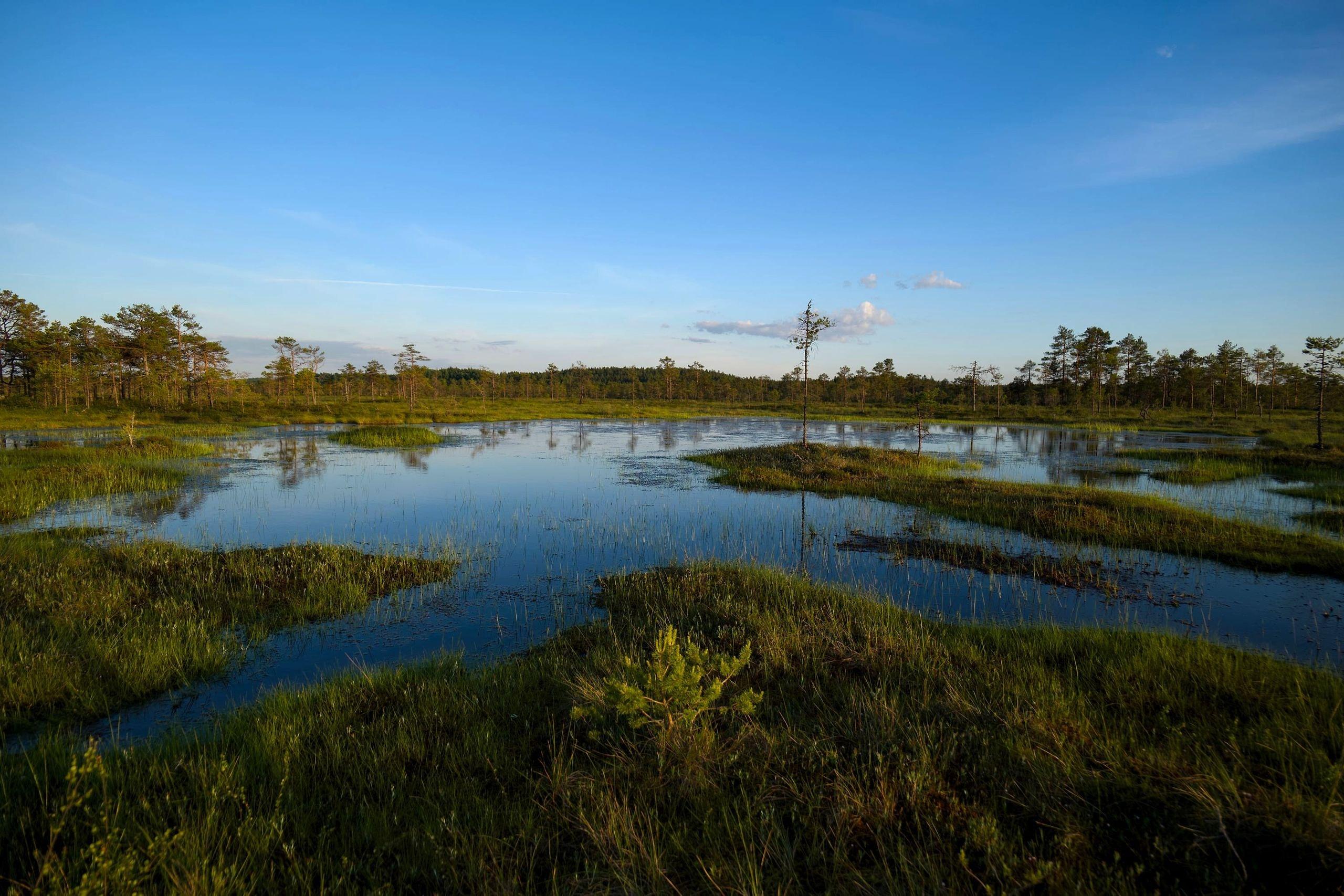
An oak trunk falls into water or a moor and is covered by mud, sand, clay or peat. Without oxygen, wood-decaying fungi cannot work – the wood is preserved. This process is called subfossilisation.
Oak is rich in tannins. Over a long time these react with dissolved iron compounds from water and soil, producing the characteristic dark to black colour that often reaches right into the core.
How old is bog oak?
Its age ranges from a few centuries to more than 10,000 years and is determined by radiocarbon dating or tree rings. Subfossil oaks from the river gravels of the Main, Rhine and Danube even form the basis of the long Central European oak tree-ring chronology, which researchers use to date wood to the exact year.
The wood used for our powder lay in the moor for at least 3,000 years.
Where is bog oak found – Germany, Austria, Switzerland, Poland
Bog oak occurs wherever oak forests grew along rivers, lakes and moors over past millennia. Known finds come from the valleys of the Rhine, Main, Danube, Elbe and Oder in Germany, from gravel pits and floodplains along the Danube in Austria, from lakes and moors on the Swiss Plateau, and from the Vistula (Wisła) and Oder (Odra) valleys in Poland, where it is called “czarny dąb” or “morta”.
Whole trunks are usually discovered by chance during gravel extraction, river works or peat cutting. Because well-preserved pieces are rare and recovery is laborious, bog oak is among the most valuable woods in Europe.
What is bog oak used for?
Thanks to its hardness and colour, bog oak is prized for furniture, flooring, knife handles, jewellery, pens and musical instruments. The very wet wood must be dried slowly and gently before use, otherwise it cracks.
Finely ground, the heartwood is also sold as a natural powder. Our bog oak powder consists of one single ingredient – pure heartwood – and is taken once a day in a small amount. It is not a medicine.
Good to know
Is bog oak the same as black oak?
In Europe, yes: both terms describe oak wood that lay without oxygen for a long time and turned dark. Not to be confused with the North American tree species Quercus velutina, which is also called black oak.
Why is bog oak black?
Over a long time the tannins in oak react with iron compounds from water and soil, colouring the wood dark to black.
How old can bog oak be?
From a few hundred to over 10,000 years, determined by radiocarbon dating or tree rings.
Where can I buy bog oak powder?
On moor-eiche.de in three jar sizes (30, 60 and 120 ml) from €80. The order is completed in our shop at plasmabett.de.
Last updated: October 2026